 Miriel
Miriel Team · allergens, starting solids, food allergy, infant feeding, peanut
What Order to Introduce Allergens to Your Baby
No required order exists. Guidelines put peanut and cooked egg first around 6 months, then the rest of the Big-9 one at a time. Here is a sample plan.
There is no research-mandated order for introducing allergens. Guidelines agree on only one real priority: offer peanut and cooked egg early — around 6 months, once your baby is already handling a few plain first foods — because those two have the strongest evidence behind early introduction (NIAID 2017 addendum, AAP 2019 clinical report). After that, the remaining Big-9 allergens can go in whatever practical order fits your kitchen — one new one at a time, and each kept in the diet once your baby tolerates it.
So if you have been searching for “the correct sequence” and finding only vague answers, here is the honest reason: the sequence itself is not what matters. What matters is starting early, going one allergen at a time so you can spot a reaction, and keeping the ones that go well on the menu.
Why peanut and cooked egg come first
The NIAID guidelines and the AAP clinical report single out peanut and egg specifically because that is where the trial evidence is strongest. In the LEAP trial, early, regular peanut introduction reduced peanut allergy prevalence among the high-risk infants studied compared with avoidance. That result applies to the studied population and to peanut — it is not a guarantee for any individual baby or a promise about other foods — but it is why guidelines moved from “delay allergens” to “introduce peanut and egg early.”
Both are introduced in a baby-safe form: thinned smooth peanut butter or peanut puffs (never whole peanuts, a choking hazard), and well-cooked egg. Our step-by-step walkthroughs for each are here: how to introduce peanut and how to introduce egg.
The rest of the Big-9, in any sensible order
Once peanut and egg are underway, the other seven allergens can follow in any order that suits your meals. The Big-9 are milk, egg, peanut, tree nuts, wheat, soy, sesame, fish, and shellfish. ASCIA advises introducing these foods one at a time — and beyond prioritizing egg and peanut early, it prescribes no fixed sequence for the rest.
Practical forms for a baby:
- Milk — as an ingredient (plain yogurt, a little cheese, milk cooked into food). Cow’s milk as a main drink still waits until 12 months.
- Wheat — soft cooked pasta, iron-fortified infant cereal, or a strip of toast.
- Soy — plain soy yogurt or tofu.
- Sesame — a small amount of tahini thinned into food or spread thin on toast.
- Tree nuts — smooth nut butters (almond, cashew) thinned with water, milk, or puree. Never whole or chopped nuts.
- Fish, then shellfish — well-cooked, boneless, flaked; introduce these as two separate allergens.
A sample 8-week sequence — one example, not a protocol
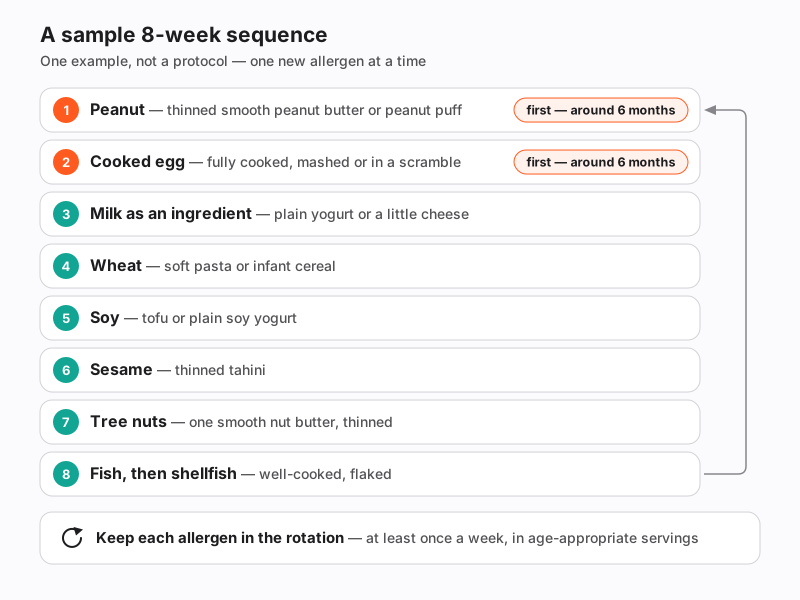
This is one reasonable way to sequence things. It is not a medical protocol, and there is nothing special about these exact weeks — reorder freely to match what you already cook.
- Week 1 — Peanut (thinned smooth peanut butter or peanut puff)
- Week 2 — Cooked egg (fully cooked, mashed or in a scramble)
- Week 3 — Milk as an ingredient (plain yogurt or a little cheese)
- Week 4 — Wheat (soft pasta or infant cereal)
- Week 5 — Soy (tofu or plain soy yogurt)
- Week 6 — Sesame (thinned tahini)
- Week 7 — Tree nuts (one smooth nut butter, thinned)
- Week 8 — Fish, then shellfish (well-cooked, flaked)
Offer each new allergen on a day your baby is well, earlier in the day rather than at night, at home rather than out — so that if a reaction happens, you can watch it and respond. Give a plain first food you already know is fine alongside the new one. On spacing, a common approach is to wait a couple of days before adding the next brand-new food so any delayed reaction is easier to attribute; we cover the reasoning in the three-day wait rule for new foods.
Keep each allergen in the rotation
Introducing an allergen once is not the finish line. ASCIA recommends keeping these foods in your baby’s diet regularly — at least once a week, in age-appropriate servings — because ongoing exposure is part of how tolerance is maintained. A food your baby ate happily in week 1 and then never saw again does not stay “done.” This is exactly why a rotation matters more than a one-time checklist: peanut and egg, in particular, are worth building into meals your family already eats each week.
Some babies should see their pediatrician first
Early introduction is the general advice, but there is an important exception. Babies with severe eczema, an existing food allergy, or both are in the higher-risk group the NIAID guidelines address directly: for them, a clinician may recommend allergy testing before peanut is introduced, and introduction may happen under medical supervision. If that describes your baby, talk to your pediatrician before starting any allergen — do not run the sequence above at home first.
For every baby, learn the difference between normal gagging (loud, often self-resolving) and true choking (silent, no air) before you start solids, and take an infant first-aid course — the American Red Cross offers infant CPR and choking training. If a reaction ever happens, stop the food and get medical help; guidelines do not advise quietly re-trying a food at home after a reaction.
The bottom line
Don’t wait for a perfect order that doesn’t exist. Start peanut and cooked egg early once your baby handles a few first foods, add the rest of the Big-9 one at a time in whatever order fits your meals, watch for reactions, and keep the winners in regular rotation.
This is educational guidance drawn from published feeding guidelines, not medical advice, and it can’t account for your particular baby — your pediatrician knows your child’s history and comes first, especially if there is eczema or a known allergy. When you’re ready to keep track of it all, Miriel’s Big-9 allergen board (Beta) follows each allergen from first taste through to regular rotation and routes higher-risk babies to their pediatrician before the program unlocks — you can start with our guideline-based solids plan.
References
- National Institute of Allergy and Infectious Diseases (NIAID). Addendum Guidelines for the Prevention of Peanut Allergy in the United States — Parent Summary. NIH / NIAID. link
- Greer FR, Sicherer SH, Burks AW, et al. The Effects of Early Nutritional Interventions on the Development of Atopic Disease in Infants and Children: The Role of Maternal Dietary Restriction, Breastfeeding, Hydrolyzed Formulas, and Timing of Introduction of Allergenic Complementary Foods. Pediatrics (AAP), 2019. link
- American Academy of Pediatrics. AAP Clinical Report Highlights Early Introduction of Peanut-based Foods to Prevent Allergies. HealthyChildren.org. link
- Australasian Society of Clinical Immunology and Allergy (ASCIA). How to Introduce Solid Foods to Babies for Allergy Prevention. ASCIA. link
- Du Toit G, Roberts G, Sayre PH, et al. Randomized Trial of Peanut Consumption in Infants at Risk for Peanut Allergy (LEAP). New England Journal of Medicine, 2015. link
- National Institute of Allergy and Infectious Diseases (NIAID). Guidelines for Clinicians and Patients for Diagnosis and Management of Food Allergy. NIH / NIAID. link