 Miriel

allergens
What Order to Introduce Allergens to Your Baby
No required order exists. Guidelines put peanut and cooked egg first around 6 months, then the rest of the Big-9 one at a time. Here is a sample plan.
Read moreStories
What we are learning as we build Miriel — pediatric nutrition science in plain English, the engineering behind the AI engines, and honest writing about what works.
allergens
No required order exists. Guidelines put peanut and cooked egg first around 6 months, then the rest of the Big-9 one at a time. Here is a sample plan.
Read morestarting solids
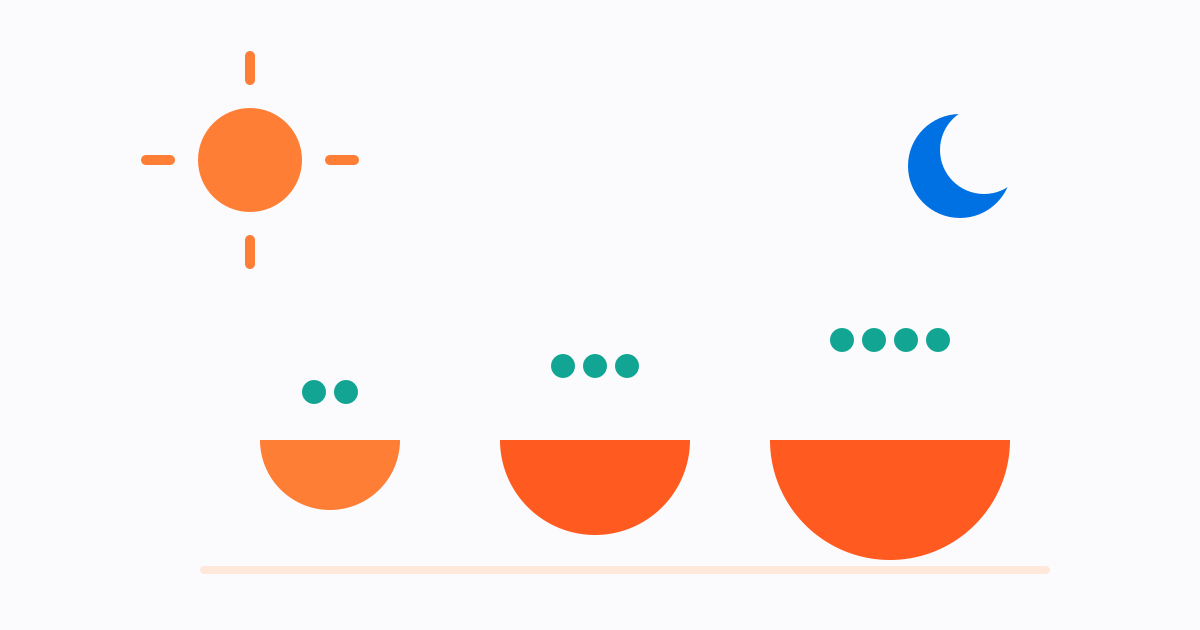
How much and how often to feed solids: 2-3 meals at 6-8 months, 3-4 at 9-11 months. Milk stays primary under 1. A simple chart.
Read morestarting solids
Refusal at 6-8 months is usually normal: readiness swings, teething, or milk crowding appetite. Keep offering, and know the red flags to call the doctor.
Read morestarting solids
The best starting solids app depends on your priority: a deep visual food library, AI recipe help, or cited guideline-based plans. A 2026 comparison.
Read morestarting solids
Yes, harder stools are common when solids begin: less milk, more bulk, low-fibre first foods. What is normal, what helps, and the red flags.
Read morestarting solids
Gagging is loud, red-faced and normal; choking is silent or blue and an emergency. The signs, the memorable rule, and how to prevent it.
Read morestarting solids
Give well-cooked whole egg, yolk and white together, from around 6 months. The yolk-first tradition is outdated and delaying egg is not protective.
Read morepeanut
Most babies can start smooth peanut butter around 6 months. Babies with severe eczema or egg allergy should see their doctor first, near 4-6 months.
Read morestarting solids
You don't need a strict 3-day wait for every new food. A short watch matters for Big-9 allergens; plain foods need no long pause—variety counts.
Read morepicky eating
Most toddlers need many calm, no-pressure tries — often 10 or more — before accepting a new food. Repeated offering works; pressure and bribes backfire.
Read morefamily nutrition
A practical guide to family nutrition — what good nutrition means for children, how it shapes academic and physical outcomes, and how busy families can build sustainable habits without perfectionism.
Read moreadded sugar
Many snacks marketed for children carry the same added-sugar load as candy, hidden behind health-coded packaging. This is a practical guide to reading what's actually in the box.
Read moreiron deficiency
Iron deficiency is the most common nutritional deficiency in childhood, and the toddler years are when it most often appears. Early signs are easy to mistake for ordinary toddler behaviour — here is what pediatricians actually look for.
Read morepicky eating
Most picky eating is developmental and resolves on its own. A smaller group of children have something different — Avoidant/Restrictive Food Intake Disorder. The line between the two is clearer than most parents are told.
Read morevitamin D
Vitamin D deficiency is widespread in children, and the AAP recommends 400 IU per day from infancy. Here is what the recommendation actually says, who it applies to, and why dietary intake alone is rarely enough.
Read moresolid foods
Parents hear conflicting advice on when to start solids. The 4-month vs 6-month conversation is not actually a disagreement among pediatric bodies — it is a question of which signal you weight more. Here is what the major guidelines say and why.
Read morechildhood obesity
Childhood obesity prevention is not about cutting calories — it is about building a supportive environment that combines balanced nutrition, healthier beverage choices, physical activity, and emotional well-being from toddlerhood through adolescence.
Read morekorea
Korea's nutrition guidance is a wheel, not a pyramid — a continuous cycle of food, hydration, and movement. The structure hasn't changed in years, but how Korean nutrition science interprets it has.
Read more